
The AI Supercycle Meets the Electricity Crisis: Investing in the Back End of Innovation
Last Updated: March 29, 2026 | Reading Time: 11 minutes
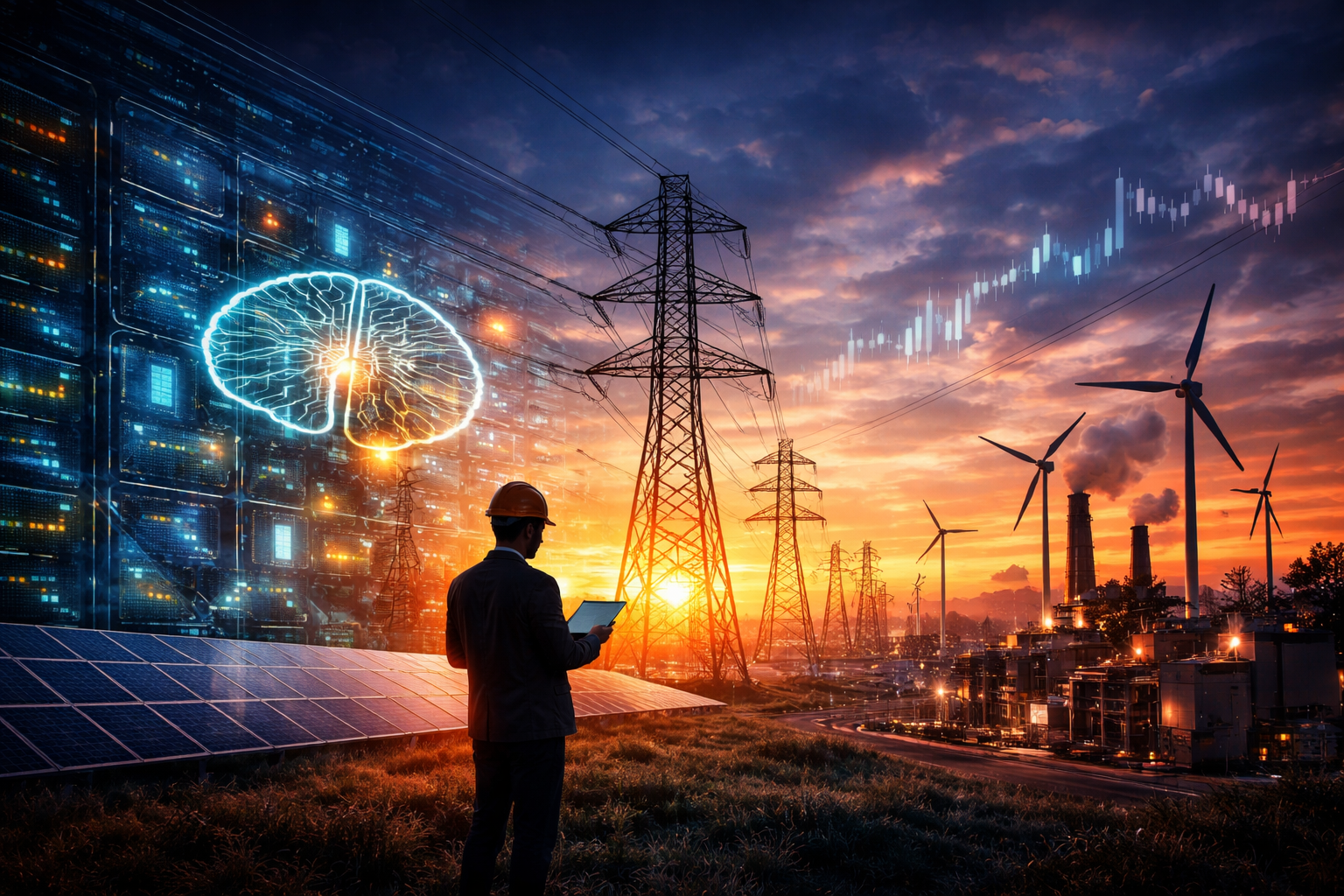
⚡ The Collision That Will Define 2026 Investing
Every gold rush has its shovel sellers. But what happens when the shovels run out of steel?
We are witnessing the greatest technology build out in human history. Artificial intelligence is not just changing software. It is devouring electricity at a pace no one anticipated. ChatGPT, Claude, Gemini, and the thousands of AI applications emerging daily share one dirty secret. They are power hungry beasts disguised as clean code.
Here is the crisis no one is talking about. The AI supercycle is colliding head-on with an electricity grid that cannot keep up. Data centers that power our digital future are consuming more energy than entire nations. The back end of innovation is not algorithms. It is amps, volts, and watts.
For investors, this collision creates the opportunity of the decade. While everyone chases the next AI software unicorn, the real money is flowing into the infrastructure keeping the lights on. Power generation, grid modernization, nuclear renaissance, and energy efficiency. Welcome to the back end of innovation.
📊 The Shocking Numbers Behind the Crisis
AI Query vs Google Search Energy
US Electricity from Data Centers 2026
Grid Investment Needed by 2030
Average Data Center Power Wait Time
🔌 Why the Grid Is Breaking
The artificial intelligence revolution has a body count. That body is the twentieth century power grid designed for factories and homes, not for warehouses full of GPUs running hot 24 hours a day.
A single ChatGPT query consumes approximately 2.9 watt hours of electricity. That is ten times what a standard Google search requires. Scale that to billions of queries daily, add image generation, video creation, and code writing, and you have an energy appetite that dwarfs many industries.
By 2026, AI data centers are projected to consume 8% of total United States electricity generation. That is triple the share from just four years prior. In Virginia, the data center capital of the world, power demand is growing so fast that utility Dominion Energy has stopped connecting new facilities until 2026 because the transmission infrastructure simply does not exist.
This is not a temporary bottleneck. This is a structural crisis. The International Energy Agency estimates that global data center electricity consumption will double between 2022 and 2026. Meanwhile, renewable energy projects face permitting delays of three to five years. Natural gas plants face environmental opposition. Coal is politically toxic. The math does not work without a complete infrastructure overhaul.
🎯 The Four Pillars of Back End Investing
Smart investors do not wait for crises to resolve. They position capital where solutions are being built. The AI electricity crisis creates four distinct investment categories, each with massive tailwinds for 2026 and beyond.
⚛️ Pillar 1: Nuclear Renaissance
Nuclear energy is having a moment no one expected. After decades of decline, advanced reactors and small modular designs are attracting billions in private capital. Why? They provide the only carbon free baseload power that can run 24/7 without weather dependency.
Microsoft just signed a twenty year power purchase agreement with Constellation Energy to restart the Three Mile Island facility specifically for AI data centers. Amazon is investing $500 million in small modular reactor development. Google and Oracle are exploring nuclear powered floating data centers.
For investors, this means exposure to uranium miners, reactor builders, and utilities with nuclear licenses. Companies like Constellation Energy, Vistra, Cameco, and NuScale Power are becoming essential infrastructure plays disguised as energy stocks.
🔧 Pillar 2: Grid Modernization
The existing power grid is dumb. Electricity flows one way from generator to consumer. The modern grid needs to be intelligent, bidirectional, and capable of balancing intermittent renewables with surging demand spikes.
This requires transformers, switchgear, smart meters, and power management systems that most people have never considered. Eaton, Schneider Electric, Siemens, and ABB are building the nervous system of the AI age. Their order books are filling with multi year backlogs as utilities rush to upgrade.
The United States Department of Energy estimates that $1.4 trillion in grid investment is needed by 2030. That is triple the spending rate of the past decade. Every dollar of that flows through a small group of industrial champions.
🏭 Pillar 3: Power Efficient Semiconductors
Not all AI chips are created equal. As electricity costs soar, the economic advantage shifts to processors that deliver more computation per watt. Nvidia dominates training, but inference at scale requires efficiency.
AMD, Marvell, and custom chip designers like Broadcom are gaining ground with power optimized architectures. Beyond processors, power management chips from Texas Instruments, Analog Devices, and ON Semiconductor are becoming mission critical components.
The back end of AI innovation includes the chips that regulate voltage, manage heat, and convert power with minimal loss. These are not sexy products, but they are essential and increasingly scarce.
🌊 Pillar 4: Geothermal and Alternative Baseload
While nuclear grabs headlines, enhanced geothermal energy is quietly scaling. Companies like Fervo Energy and Eavor Technologies are using drilling techniques borrowed from fracking to access earth heat anywhere, not just volcanic regions.
Geothermal offers the holy grail of power: renewable, baseload, location flexible, and minimal surface footprint. For data centers that need reliable power in specific locations, this is becoming competitive with fossil alternatives.
📈 Top Investment Opportunities for 2026
Knowing the theme is useless without specific targets. Here are the categories and leading companies positioned to capture the AI electricity infrastructure build out.
🟢 Nuclear & Clean Baseload
- Constellation Energy (CEG): Largest nuclear fleet in the US, signing premium data center contracts
- Vistra (VST): Nuclear and battery storage hybrid strategy for grid stability
- Cameco (CCJ): Leading uranium miner with supply agreements extending through 2040
- Oklo (OKLO): Small modular reactor developer backed by Sam Altman
🔵 Grid Infrastructure & Electrification
- Eaton Corporation (ETN): Electrical components and power management systems
- Schneider Electric (SU.PA): Data center power and cooling solutions leader
- Vertiv Holdings (VRT): Critical infrastructure for data centers including power and cooling
- Quanta Services (PWR): Largest electric power infrastructure contractor in North America
🟡 Power Efficient Technology
- Nvidia (NVDA): Dominant AI training with improving power efficiency per generation
- Marvell Technology (MRVL): Custom AI chips and data center interconnects
- Monolithic Power Systems (MPWR): Power management semiconductors for cloud computing
- Vicor Corporation (VICR): High efficiency power converters for AI workloads
🟣 Utilities with Growth Optionality
- NextEra Energy (NEE): Renewable leader with massive data center demand exposure
- Dominion Energy (D): Virginia data center corridor with transmission expansion plans
- Southern Company (SO): Nuclear expansion and grid modernization in the Southeast
- American Electric Power (AEP): Transmission infrastructure spanning eleven states
⚠️ Risks That Could Derail the Thesis
No investment theme is without danger. The AI electricity play faces specific threats that could turn gold into coal.
🔴 Regulatory Whiplash
Nuclear energy remains politically controversial. A major accident, even overseas, could freeze permitting and kill the renaissance. Environmental opposition to transmission lines can delay projects for years. The regulatory environment is improving but remains volatile.
🔴 Technology Disruption
What if AI efficiency improves faster than expected? New algorithms that require less computation could reduce power demand growth. Quantum computing, though distant, might eventually replace certain AI workloads entirely. The current crisis assumes current technology trajectories continue.
🔴 Economic Slowdown
AI investment is currently recession resistant because it is viewed as essential competitive infrastructure. But a severe economic contraction could freeze data center construction and delay grid upgrades. Infrastructure is cyclical, even when the narrative suggests otherwise.
🔴 Interest Rate Sensitivity
Infrastructure projects are capital intensive and often financed with significant debt. Higher interest rates increase project costs and reduce returns. The current environment of elevated rates already threatens some marginal projects.
🎯 How to Position Your Portfolio
Conviction without allocation is just opinion. Here is how to actually deploy capital into the AI electricity theme without blowing up your risk profile.
✅ Core Satellite Approach
Maintain 70% of your equity allocation in broad index funds. Use the remaining 30% for thematic exposure. Within that satellite, allocate 10% to 15% for energy infrastructure and electrification plays. This gives meaningful exposure without betting the farm.
✅ Diversify Across Subthemes
Do not put everything into nuclear. Spread across nuclear, grid infrastructure, efficient semiconductors, and exposed utilities. Each subtheme has different risk drivers. Diversification protects against single factor collapse.
✅ Consider ETFs for Broad Exposure
For investors who prefer diversification within the theme, several ETFs offer exposure. The Global X Uranium ETF (URA) for nuclear fuel, iShares Global Clean Energy (ICLN) for renewables, and First Trust NASDAQ Clean Edge Green Energy (QCLN) for electrification plays.
✅ Think in Decades, Not Quarters
Infrastructure investing requires patience. These projects take years to permit, build, and monetize. The AI electricity crisis will not resolve in 2026. It is a multi year, potentially multi decade transformation. Position sizing should reflect that timeline.
🎓 Frequently Asked Questions
How does AI impact electricity demand?
Artificial intelligence is driving unprecedented electricity demand through power hungry data centers. A single AI query consumes ten times the energy of a standard Google search. By 2026, AI data centers are projected to consume 8% of total US electricity, up from 2% in 2022. This surge is creating bottlenecks in power grid capacity and driving massive investment into generation and transmission infrastructure.
What are the best stocks for AI power infrastructure?
Leading opportunities include nuclear energy providers like Constellation Energy and Vistra for reliable baseload power, utility companies with strong transmission networks such as NextEra Energy and Dominion Energy, power semiconductor manufacturers including Marvell and Monolithic Power Systems for efficient processing, and grid modernization specialists like Eaton and Vertiv for infrastructure upgrades.
Is nuclear energy safe for data center power?
Modern nuclear facilities have exceptional safety records compared to historical plants. Advanced reactor designs incorporate passive safety features that prevent meltdowns without human intervention. For data centers, nuclear offers carbon free, 24/7 baseload power that does not depend on weather or battery storage. The risk profile is increasingly accepted by technology companies facing their own net zero commitments.
How long will the AI electricity crisis last?
Industry analysts project that electricity supply constraints for AI infrastructure will persist through at least 2028. Building new power generation takes three to seven years. Transmission infrastructure requires similar timelines. Until supply catches up with demand, companies with existing power capacity or rapid deployment capabilities will command premium pricing and competitive advantages.
Should I invest in Bitcoin mining stocks for energy exposure?
Bitcoin miners like Riot Platforms and Marathon Digital have pivoted toward AI data center hosting because their existing energy contracts are valuable. However, this is a higher risk play than pure infrastructure. Mining companies carry Bitcoin price volatility, regulatory uncertainty, and operational challenges. They may benefit from the electricity crisis but are not pure plays on the theme.
🔮 The Infrastructure Decade Begins Now
The front end of innovation gets the glory. The back end gets the returns.
Artificial intelligence is the most significant technological shift since the internet. But the internet required massive infrastructure build outs that created trillion dollar companies in fiber optics, data centers, and wireless networks. AI requires an equally massive physical transformation of the power grid.
Investors who recognize this shift early position themselves ahead of the capital flood. The AI supercycle is not just about software. It is about steel, copper, uranium, transformers, and transmission lines. It is about keeping the lights on while the machines learn.
The electricity crisis is not a bug in the AI revolution. It is the feature that will separate winning investments from losing ones. The back end of innovation is where the 2026 opportunity lives.
Power is the new platform. Invest accordingly.
Which infrastructure plays are you adding to your portfolio? Share your strategy in the comments and subscribe for weekly analysis on the energy transition.
Educational Content Notice
This article is for educational and informational purposes only. It does not constitute financial, investment, or trading advice. All stock mentions are for illustrative purposes and not specific recommendations. Energy infrastructure investing carries significant risks including regulatory changes, technological disruption, and capital intensity. Consult a qualified financial advisor before making investment decisions.
⚡ Consult a fee-only fiduciary financial advisor for personalized guidance.
FTC Disclosure Compliance
In compliance with FTC guidelines: (1) We are not financial advisors or investment professionals; (2) This content is educational, not personalized advice; (3) We may receive compensation from advertisements displayed; (4) Any stock performance figures are historical examples, not guarantees; (5) Past performance does not predict future results; (6) We may hold positions in securities mentioned; (7) Always conduct your own research before investing.
© 2026 Dorta & Co. Finance. All rights reserved.
Tags: AI supercycle, electricity crisis, power infrastructure investing, nuclear energy stocks, data center power, grid modernization, energy transition investing, 2026 investment trends, Constellation Energy, NextEra Energy, uranium investing