
By Felipe Dorta, Financial Content Editor
Last Updated: March 13, 2026 | Originally Published: March 13, 2026
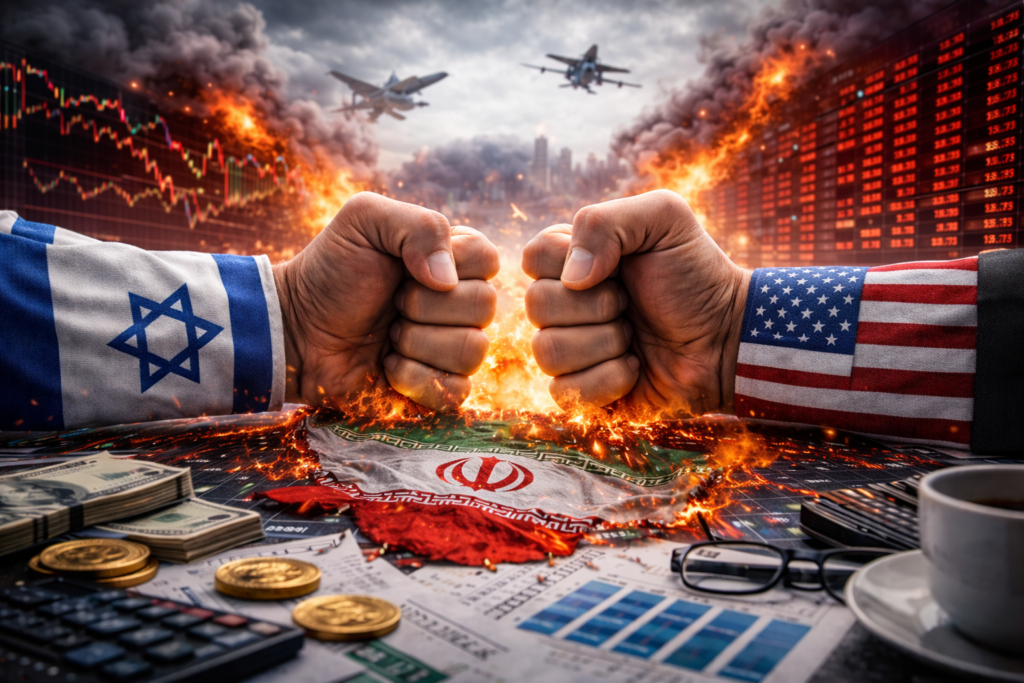
Wall Street’s worst fears materialized on March 12, 2026. As Brent crude oil surged past $100 per barrel for the first time since August 2022, the Dow Jones Industrial Average plummeted 739 points, closing below 47,000 a level not seen since early 2025. The S&P 500 shed 1.52% while the Nasdaq Composite tumbled 1.78%, marking the lowest closes of the year for all three major indexes.
The catalyst: escalating military operations between the U.S., Israel, and Iran that have effectively paralyzed the Strait of Hormuz, the world’s most critical oil chokepoint. With Iran’s new Supreme Leader Mojtaba Khamenei declaring the strait must remain closed as “a tool to pressure the enemy,” investors are confronting a stark new reality one where energy security, inflation risks, and market volatility intersect with terrifying speed.
Critical Alert: The International Energy Agency (IEA) announced the largest coordinated oil release in history 400 million barrels from strategic reserves yet prices continued climbing. As Deutsche Bank’s Jim Reid warned clients: “With each passing day it gets harder to argue that the disruption to shipping and energy infrastructure will only prove temporary.”
The Anatomy of a Supply Shock
The numbers are staggering. Approximately 20 million barrels of crude oil and petroleum products transit the Strait of Hormuz daily representing roughly 20% of global oil consumption. Since the conflict intensified, this flow has slowed to a trickle.
The economic mathematics are brutal. Goldman Sachs economists calculate that every sustained 10% increase in oil prices boosts U.S. inflation by 0.2 percentage points and reduces GDP growth by 0.1 percentage points. With Brent crude jumping from $72 pre-conflict to over $100 a 40% surge the inflationary impact is already baked into Q2 2026 forecasts.
But oil isn’t the only commodity under pressure. The Strait of Hormuz handles 4.5% of annual global trade, including fertilizer, precious metals, aluminum, and cement. The IEA reports the war is “creating the largest supply disruption in the history of the global oil market,” while Qatar’s LNG production has been shut in, cutting off 20% of global LNG supply.
Market Reaction: From Complacency to Panic
The speed of the market reversal caught many off guard. Just days earlier, President Trump had assured markets the war would end “very soon,” triggering a brief relief rally. That optimism evaporated as Iran launched coordinated attacks on commercial vessels in the Persian Gulf and Dubai reported drone strikes.
March 12, 2026 Market Snapshot:
- Dow Jones: 46,677.85 (-739.42 points, -1.56%)
- S&P 500: 6,672.62 (-1.52%)
- Nasdaq: 22,311.98 (-1.78%)
- Brent Crude: $100.46/barrel (+9.22%)
- WTI Crude: $95.73/barrel (+9.72%)
- Gold: $5,190/ounce (near record highs)
Eight of eleven S&P 500 sectors finished negative, with banks and technology leading declines. Only energy stocks Chevron and Exxon Mobil posted gains, highlighting the sector’s role as the lone bright spot in a sea of red.
Stagflation Looms: The Triple Threat
Economists are increasingly warning of stagflation a toxic economic cocktail combining high inflation, rising unemployment, and stagnant growth. The ingredients are already mixing:
Inflation: Energy costs permeate every economic sector. Oxford Economics projects that if oil averages $140 per barrel for just two months, the spillover effects could reduce global real GDP by 0.7% by year-end 2026.
Employment: The U.S. unemployment rate sits at 4.4%, but recent jobs reports have consistently disappointed. Federal Reserve research indicates that simultaneous shocks to geopolitical risk and oil prices weigh on hiring twice as heavily as either factor alone.
Growth: Q1 2026 GDP estimates have collapsed to 1.4%, down from robust Q2-Q3 2025 performance. Goldman Sachs now sees a 25% probability of recession within 12 months.
The $140 Question: Oxford Economics’ chief economist Ryan Sweet warns that oil must reach $140/barrel and stay there for eight weeks to trigger a full U.S. recession. With Brent at $100 and climbing, that threshold no longer seems impossible.
Three Scenarios: How This Could Play Out
Charles Schwab analysts have mapped three potential trajectories for markets, each with distinct implications for portfolio positioning:
Table:
| Scenario | Probability | Market Impact | Key Triggers |
|---|---|---|---|
| Upside (Quick Resolution) | Low | Rapid rebound to pre-conflict levels | Ceasefire, Hormuz reopens, Iran negotiations begin |
| Moderate (Protracted Conflict) | High | Continued volatility, U.S. outperforms | Military operations continue 4-8 weeks, no supply disruption |
| Downside (Regional Escalation) | Medium | Severe correction, 20%+ decline | Hormuz closed 3+ months, $140+ oil, global supply crisis |
Current Assessment: Schwab maintains that upside and moderate scenarios remain most likely, but cautions: “We don’t believe now is the time to aggressively add risk; it’s too early to call the ‘all clear.'”
The downside scenario where global energy supplies face prolonged disruption—presents existential risks. In this environment, international markets (particularly Europe and Asia-Pacific) would suffer disproportionately due to higher reliance on Middle East imports. U.S. equities might outperform relatively, but absolute returns would still suffer.
The Fed’s Dilemma: Rock, Meet Hard Place
The Federal Reserve faces an impossible choice. Futures markets currently price virtually zero probability of rate cuts at the next meeting—a dramatic shift from early 2026 expectations.
Option A: Hold Steady
Moody’s chief economist Mark Zandi argues the Fed will “sit on their hands until they get some clarity around how the war with Iran is playing out and which of its mandates—low and stable inflation or full-employment is most in jeopardy.” This could take 2-3 months.
Option B: Cut Rates
Bank of America economist Aditya Bhave offers a contrarian view: the soft labor market and modest fiscal support “set us up for a more dovish Fed response if the oil shock is persistent.” Unlike 2022, when the economy could withstand supply shocks, current fragility may force the Fed’s hand.
Historical Precedent: Geopolitical conflicts typically create short-lived volatility unless they trigger major economic disruption. JPMorgan notes that since 1979, regime changes in oil-producing nations have driven oil prices up 30% on average but markets eventually recover.
Sector-by-Sector: Winners and Losers
Energy: The Obvious Beneficiary
With oil at $100 and potentially heading higher, integrated oil majors offer defensive characteristics with upside optionality. Chevron and Exxon Mobil have outperformed during the recent turbulence. Exploration & production companies and oilfield services firms present higher-beta plays for aggressive investors.
Airlines & Transportation: Grounded
U.S. carriers are especially vulnerable they don’t hedge fuel costs. Jet fuel has climbed 35% above pre-war prices, and United Airlines CEO Scott Kirby warns fare increases will “probably start quick.” Summer travel demand faces severe headwinds.
Technology: Vulnerable but Selective
The Nasdaq’s 1.78% decline reflects tech’s sensitivity to rising discount rates and supply chain disruptions. However, companies with pricing power and minimal energy exposure (software, cloud services) may offer relative safety.
Defense & Aerospace
Heightened geopolitical tensions historically correlate with increased defense spending. Companies in this sector typically outperform during periods of military escalation.
Financials: Under Pressure
Banks face a triple threat: rising loan defaults if recession materializes, compressed net interest margins if the Fed cuts rates, and potential energy sector credit losses.
Strategic Positioning: Five Actions for Investors
1. Enhance Portfolio Resilience
JPMorgan recommends “portfolios should be built for resilience with gold, alternatives, and exposure to sectors governments consider strategically vital.”
Consider increasing allocation to:
- Gold and precious metals (currently $5,190/oz)
- Short-duration Treasury bonds
- Energy infrastructure MLPs
- Utilities with regulated revenue streams
2. Avoid Panic Selling
History is clear: markets recover from geopolitical shocks. The average intra-year S&P 500 drawdown is 14.5%. Current volatility, while uncomfortable, remains within historical norms. Investors who stayed the course through the Gulf War, 9/11, and the Ukraine invasion recouped losses and participated in subsequent rallies.
3. Rebalance Into Weakness
If the conflict resolves or de-escalates, equity markets could rebound rapidly. Maintain watchlists of quality companies trading at distressed valuations. International equities, particularly in Europe and Japan, offer attractive valuations relative to U.S. markets despite higher near-term risks.
4. Monitor the Strait of Hormuz
The conflict’s trajectory hinges on this 21-mile waterway. Key indicators to watch:
- Tanker traffic data (Lloyd’s List)
- Insurance premiums for Gulf shipping
- U.S. Navy escort operations (Treasury Secretary Bessent confirmed plans to escort tankers “as soon as it is militarily possible”)
- Iranian missile capability degradation (Israel claims 80% of Iran’s defense systems neutralized)
5. Prepare for $120+ Oil
Commonwealth Bank of Australia analyst Vivek Dhar warns that if physical shortages emerge, “Brent oil could surge towards $120 to 150 per barrel to force demand destruction amongst developing economies.”
Stress-test portfolios against this scenario.
The Bigger Picture: A Fragmenting World Order
Beyond immediate market impacts, the Iran war accelerates trends reshaping global finance. JPMorgan analysts note these events “reinforce the reality of a fragmenting global order” with profound long-term implications:
De-Dollarization Acceleration: China’s role as the leading importer of Iranian oil and its control of rare earth elements vital to U.S. national security creates leverage that could accelerate shifts away from dollar-denominated assets.
Energy Independence Premium: The U.S., less reliant on Middle East imports due to domestic production, faces relatively lower direct economic impact. However, global price spikes affect all consumers regardless of source.
Strategic Sector Investing: Governments worldwide are prioritizing supply chain security in energy, semiconductors, and critical minerals. Companies aligned with these strategic imperatives may enjoy policy support and investment flows.
Conclusion: Navigate, Don’t Predict
The Iran war presents a classic investing dilemma: high uncertainty, binary outcomes, and rapidly evolving information. The temptation to make bold directional bets—either panic selling or buying the dip aggressively is strong but dangerous.
Instead, focus on what can be controlled: portfolio diversification, risk management, and liquidity. The 400 million barrel IEA release provides temporary supply cushion but cannot resolve geopolitical tensions.
Oil at $100 may be the new normal for weeks or months, not days.
For long-term investors, remember that markets have absorbed far worse. The 1979 Iranian Revolution more than doubled oil prices and triggered global recession yet equities eventually recovered and reached new highs. Today’s disruptions, while serious, occur against a backdrop of stronger U.S. energy independence and more robust financial systems.
The watchword for Q2 2026: vigilance without panic. Monitor developments, maintain flexibility, and resist the urge to react to every headline. In geopolitical investing, time horizon is the ultimate edge—and patience, the rarest commodity.
Market Data as of March 12, 2026
Table:
| Indicator | Value | Change |
|---|---|---|
| Dow Jones | 46,677.85 | -1.56% |
| S&P 500 | 6,672.62 | -1.52% |
| Nasdaq | 22,311.98 | -1.78% |
| Brent Crude | $100.46 | +9.22% |
| WTI Crude | $95.73 | +9.72% |
| Gold | $5,190.00 | +0.8% |
| VIX | 28.4 | +15.2% |
| 10-Year Treasury | 4.32% | -0.08% |
Sources: CNBC, Reuters, Bloomberg, Charles Schwab Research
Ready to Navigate Market Volatility?
Download our Magazine Mach Edition for portfolio strategies during international crises.
Subscribe to Dorta & Co. Finance for real-time market analysis and investment alerts.
Disclaimer: This article is for educational purposes only and does not constitute financial advice. Market conditions can change rapidly. Consult a qualified financial advisor before making investment decisions. Past performance does not guarantee future results. Geopolitical events carry unpredictable risks.
About the Author: Felipe Dorta is a Financial Content Editor at Dorta & Co. Finance, specializing in macroeconomic analysis and geopolitical risk assessment. Connect via LinkedIn or Telegram.