
By Felipe Dorta, Financial Content Editor
Last Updated: March 13, 2026 | Originally Published: March 13, 2026
Your credit score is about to change whether you know it or not.
In 2026, the credit scoring landscape is undergoing its most significant transformation in decades. New scoring models analyze two years of payment history instead of single snapshots. Buy Now, Pay Later (BNPL) plans used by 74% of Gen Z—now appear on credit reports. Medical debt under $500 is disappearing from records. And rent payments can finally boost your score.
For the 62.8% of Americans with good credit, these changes offer opportunities to strengthen financial standing. For the 37.2% with fair or poor credit, they provide new pathways to improvement but also new pitfalls to avoid.
This guide explains exactly what’s changing, how it affects you, and the specific actions to take in 2026 to optimize your credit profile.
The Bottom Line: “2026 is shaping up to be a transition year for how lenders evaluate borrowers, especially for mortgages. Fortunately, most of the habits that help your credit stay healthy are not changing.”
The 2026 Credit Score Revolution: Four Major Changes
Change #1: FICO 10 and VantageScore 4.0 The 24-Month View
The biggest shift in 2026 is the widespread adoption of new scoring models that look beyond single moments to analyze your financial behavior over time.
FICO 10 and VantageScore 4.0 use “trended data” examining your credit patterns over the past 24 months rather than just your current balances and most recent payment.
What this means for you:
- Good news: Consistent on-time payments over two years boost your score more than ever
- Bad news: Recent late payments hurt more, even if your current status looks fine
- The strategy: There’s no quick fix anymore. Consistency over 24 months is the only path to excellent credit
Mortgage lenders are particularly adopting VantageScore 4.0, which “can help more people, especially those with limited or ‘thin’ credit histories, have a score on record” by incorporating rent, utilities, and telecom payments.
Change #2: Buy Now, Pay Later (BNPL) Hits Credit Reports
Those four “interest-free” payments on your Affirm, Klarna, or Afterpay purchase? They’re no longer invisible.
BNPL plans now appear on credit reports and affect scores both positively if paid on time, and negatively if missed.
The stakes are enormous:
- 74% of Gen Z uses BNPL
- Average BNPL user debt: $1,117
- 43% of users have missed at least one payment
The new reality: BNPL is credit. Treat it with the same seriousness as your credit card or car payment.
Change #3: Medical Debt Cleanup
The three major credit bureaus Equifax, Experian, and TransUnion have implemented sweeping changes to medical debt reporting:
- Paid medical collections: Removed entirely from credit reports
- Medical debts under $500: No longer reported
- Unpaid medical collections: Must be over $500 and at least 365 days old before appearing
This change eliminates “surprise dings” for millions of Americans who faced credit damage from medical billing errors or insurance delays beyond their control.
Change #4: Alternative Data Integration
For Americans with “thin” credit files especially younger borrowers, recent immigrants, and minorities 2026 brings legitimate pathways to establish credit through payments that previously didn’t count:
- Rent payments (through reporting services)
- Utility bills (electric, gas, water)
- Telecom payments (cell phone, internet)
- Subscription services (streaming, gym memberships)
VantageScore 4.0 explicitly incorporates these data points, potentially helping “more people… have a score on record” and qualify for mortgages who previously couldn’t.
Credit Score Fundamentals: What Still Matters
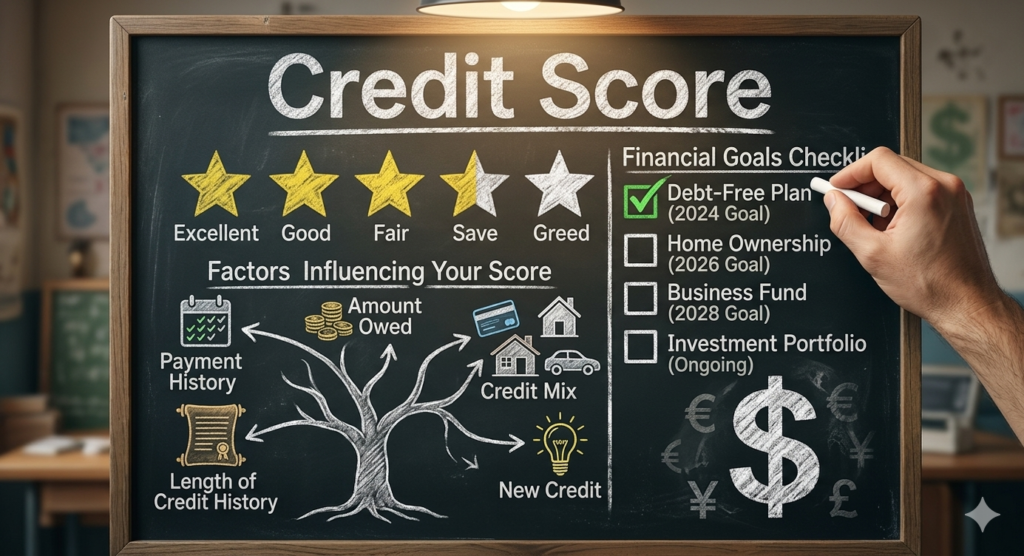
Despite all the changes, the core components of your credit score remain consistent. Understanding these factors helps you prioritize your optimization efforts:
Table:
| Factor | Weight (FICO) | What It Means | 2026 Impact |
|---|---|---|---|
| Payment History | 35% | On-time payments on all accounts | Now analyzes 24-month trends |
| Credit Utilization | 30% | Balance vs. credit limit ratio | Keep under 30%, ideally under 10% |
| Length of History | 15% | Age of oldest account, average age | Don’t close old accounts |
| Credit Mix | 10% | Variety of credit types (cards, loans) | BNPL now counts in mix |
| New Credit | 10% | Recent applications and inquiries | Hard inquiries still matter |
The fundamental truth: “On-time payments still matter most. Lower balances relative to your limits remain important. Length of credit history still plays a role, so older accounts often help.”
2026 Credit Score Benchmarks: Where Do You Stand?
Understanding your position relative to national averages helps set realistic goals:
Table:
| Score Range | FICO Rating | % of Americans | Typical Access |
|---|---|---|---|
| 800-850 | Exceptional | 24% | Best rates, highest limits |
| 740-799 | Very Good | 23% | Excellent rates, premium products |
| 670-739 | Good | 21% | Standard rates, most products |
| 580-669 | Fair | 17% | Higher rates, limited options |
| 300-579 | Poor | 15% | Secured cards, high rates |
National Averages (2026):
- Average FICO Score: 716 (all-time high)
- Average VantageScore: 698 (all-time high)
- Gen Z Average: 674 (up from 667 in 2019)
- Millennial Average: 680
- Baby Boomer Average: 736
Geographic Variation:
- Highest: Minnesota (724), Vermont (721), Massachusetts (720)
- Lowest: Mississippi (662), Louisiana (669), Alabama (671)
The 2026 Action Plan: Optimize Your Credit Score
Immediate Actions (This Week)
1. Check Your Credit Reports Request free reports from all three bureaus at AnnualCreditReport.com. Look for:
- Incorrect balances or accounts that aren’t yours
- Late payments reported in error
- Old collections that should have aged off
- BNPL accounts you didn’t recognize would report
2. Set Up Automatic Payments “Payment history is the single largest factor in your credit score, accounting for about 35 percent of your overall score. Even one late payment can stay on your credit report for years.”
Automate minimum payments on all accounts. You can always pay more manually, but automation prevents accidental late marks.
3. Optimize Credit Utilization “Most experts recommend staying below 30 percent, with under 10 percent being ideal.”
Tactics to lower utilization:
- Pay balances before your statement closes (not just before due date)
- Request credit limit increases on existing cards
- Make multiple payments per month to keep reported balances low
Short-Term Actions (This Month)
4. Report Your Rent If you’re a renter, use services like Experian Boost, RentTrack, or Pinwheel to report on-time rent payments. “TransUnion found that disclosing rent payment history increased Americans’ VantageScore by an average of nearly 60 points.”
5. Audit Your BNPL Usage Review all active BNPL plans. Ensure you have automatic payments set up and calendar reminders for due dates. Remember: these now affect your credit score exactly like credit cards.
6. Dispute Errors Immediately Under 2026’s strengthened Fair Credit Reporting Act updates, dispute timelines are faster and documentation requirements are stronger. “Addressing errors early can prevent unnecessary damage and help you start the year on solid footing.”
Long-Term Strategy (This Year)
7. Keep Old Accounts Open “Closing old accounts can shorten your average account age. It can also reduce your available credit and increase your utilization ratio.”
If an old card has an annual fee, request a product change to a no-fee version rather than closing it.
8. Become an Authorized User (Strategically) If building credit from scratch, “becoming an authorized user on a trusted family member’s or friend’s credit card can help. Positive payment history on that account may be reflected on your credit report.”
Critical: Ensure the primary cardholder has excellent payment habits. Their missed payments become your missed payments.
9. Maintain Credit Mix Without Overextending “You don’t need every type of credit, but responsibly managing different types over time can help strengthen your credit profile.”
If you only have credit cards, consider a small credit-builder loan. If you only have loans, add a no-annual-fee credit card for regular use.
10. Monitor Continuously “Consider checking your credit at least quarterly to review changes, after major financial events, or if you notice unexpected account activity. Staying informed keeps you in control.”
Use free services like Credit Karma for ongoing monitoring and alerts.
Special Situations: Custom Strategies
For Young Adults (18-29)
- Challenge: Average score 674, highest delinquency rates
- Strategy: Become authorized user on parent’s card, report rent payments, use secured credit cards responsibly, avoid BNPL debt accumulation
For Credit Rebuilders (Score < 600)
- Challenge: 15.5% of Americans (39.3 million people)
- Strategy: Secured credit cards, credit-builder loans, authorized user status, disputing errors, 24-month perfect payment history to qualify for score improvements
For High Achievers (Score 740+)
- Challenge: Maintaining excellence as models change
- Strategy: Continue automation, optimize utilization to 1-3% for maximum points, add premium card products for credit mix, monitor for identity theft
For Thin File Borrowers (No Score or Limited History)
- Challenge: 9% of Americans have no score
- Strategy: Report rent immediately, use Experian Boost for utilities, become authorized user, consider secured cards, maintain 6+ months of reported payments for score generation
2026 Mortgage Lending: What’s Different
For homebuyers, 2026 brings the most significant changes in mortgage qualification since the financial crisis:
VantageScore 4.0 Adoption: Mortgage lenders can now use VantageScore 4.0, which “can help more people, especially those with limited or ‘thin’ credit histories, have a score on record.”
What this means:
- Renters who paid on time for years can now have that history count toward mortgage qualification
- Younger borrowers with limited traditional credit can demonstrate responsibility through utility and telecom payments
- Minority borrowers previously excluded by thin files have new pathways to homeownership
The Catch: While scoring is more inclusive, “it does not guarantee loan approval. However, it gives lenders a fuller picture when evaluating applications.”
Income, debt-to-income ratio, and down payment remain critical factors.
Common 2026 Mistakes to Avoid
❌ Ignoring BNPL Reporting
Treating BNPL as “not real credit” now directly damages your score. Missed Afterpay or Klarna payments are missed credit payments.
❌ Closing Old Credit Cards
With FICO 10 emphasizing 24-month history, closing your oldest account shortens your track record and hurts your score.
❌ Maxing Cards Then Paying Off
Even if you pay in full monthly, high reported balances hurt utilization. Pay before the statement closes.
❌ Disputing Accurate Information
“Credit-repair scams or promises of ‘erase everything fast’… if the activity is accurate, it remains on your report—even if you pay off the debt.”
❌ Applying for Multiple Cards at Once
“Each application typically creates a hard inquiry, which may temporarily lower your score.”
Space applications 3-6 months apart.
❌ Neglecting Medical Bill Follow-Up
Even though small medical debts no longer report, unpaid bills over $500 still do. Follow up on insurance disputes promptly.
The Future of Credit Scoring: Beyond 2026
The changes implemented in 2026 represent a fundamental shift toward “alternative data” and behavioral trend analysis. Looking ahead:
- Income and employment data may integrate directly into scoring models
- Real-time payment tracking could replace monthly reporting
- AI-powered scoring may personalize risk assessment beyond population averages
- Open banking could allow consumers to share account data for better rates
The trend is clear: credit scoring is becoming more inclusive, more behavioral, and more real-time. The static, snapshot-based system is ending.
Your 2026 Credit Score Checklist
January: Check all three credit reports, dispute errors, set up autopay February: Report rent payments, audit BNPL accounts, optimize utilization March: Request credit limit increases, review credit mix, add alternative data Quarterly: Monitor scores, check for identity theft, reassess strategy Annually: Full report review, goal setting, product optimization
Conclusion: Credit Mastery in the New Era
The 2026 credit scoring changes reward consistency and punish volatility. There’s no shortcut to excellent credit—only 24 months of disciplined financial behavior.
But there’s also never been more opportunity. If you’ve paid rent on time for years, that history now counts. If medical bills damaged your score unfairly, that damage is reversing. If you’re young or new to credit, alternative data provides a legitimate starting point.
Your credit score is no longer just a number. It’s a comprehensive financial reputation—one that you can actively shape with knowledge and discipline.
Start today. The 2026 models are watching.
Ready to Optimize Your Credit?
Download our 2026 Credit Score Optimization Toolkit with dispute letter templates, utilization calculators, and BNPL tracking sheets.
Subscribe to Dorta & Co. Finance for monthly credit tips and lending market updates.
Disclaimer: This article is for educational purposes only and does not constitute financial or legal advice. Credit scoring models vary by lender and application. Individual results depend on specific financial circumstances. Consult qualified professionals for personalized credit guidance.
About the Author: Felipe Dorta is a Financial Content Editor at Dorta & Co. Finance, specializing in consumer credit, lending markets, and personal finance strategy. Connect via LinkedIn or Telegram.